

Dental Crown6 min read
A damaged tooth can change the way you chew, speak, and think about your smile. Even a small crack or large filling can make you wonder whether the tooth is strong enough for daily use. Fortunately, dental crowns at Big City Dental can help restore strength, shape, and appearance when a tooth needs more support than a standard filling can provide.
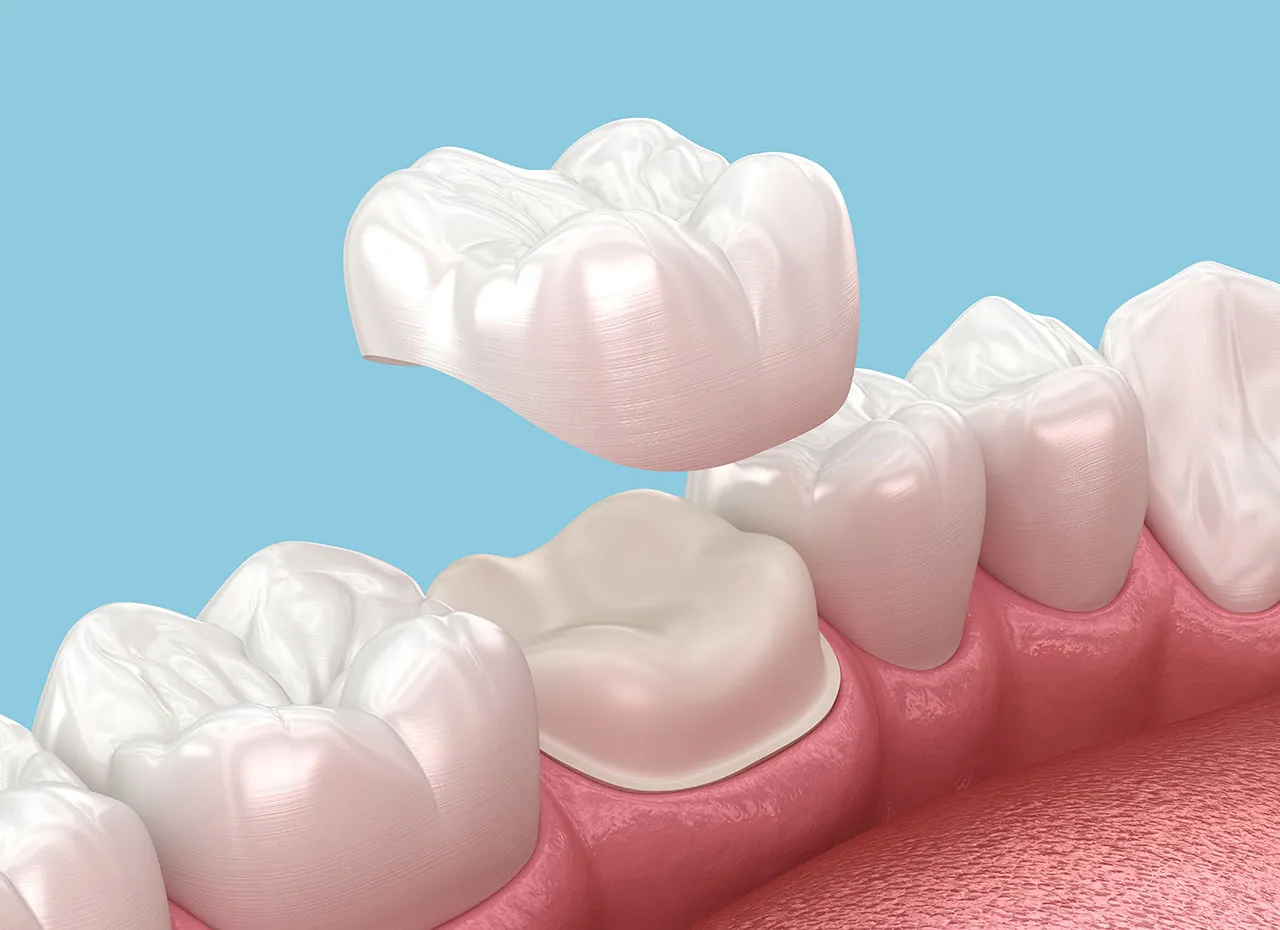
Dental crowns are custom-made restorations that cover and protect a tooth. They are often recommended when a tooth is cracked, worn, severely decayed, weakened by a large filling, or restored after root canal treatment. In addition, dental crowns may be used as part of dental bridges or implant restorations. Because a crown is designed to fit over the visible portion of the tooth, it can improve both function and appearance at the same time.
What Is a Dental Crown?
A dental crown is sometimes called a cap because it covers the tooth above the gumline. However, a well-made crown is much more than a cover. It is shaped to match your bite, support chewing pressure, and blend with nearby teeth. The goal is to protect the tooth while helping it feel comfortable and natural.
Dental crowns can be made from several materials, including porcelain, ceramic, zirconia, or porcelain fused to metal. The best choice depends on the tooth location, bite force, cosmetic needs, and long-term goals. For example, a front tooth may need a highly aesthetic material that reflects light like natural enamel. Meanwhile, a back tooth may need extra strength because it handles more chewing pressure.
At Big City Dental in Chicago, dental crowns are planned with precision so the final restoration feels secure and looks balanced. Digital impressions may be used to capture accurate details of your tooth without traditional putty trays. As a result, the crown can be designed to fit closely, support your bite, and reduce the need for unnecessary adjustments.
When Dental Crowns Are Recommended
Dental crowns may be recommended in several situations. If a tooth has a large cavity, a filling alone may not provide enough strength. In that case, a crown can cover the tooth and help prevent further fracture. If a tooth is cracked, a crown may hold the structure together and reduce the risk that the crack will spread under chewing pressure.
Dental crowns are also common after root canal therapy. Once the inner infection is treated, the tooth may need additional reinforcement. A crown helps protect it from future damage. In addition, crowns can restore teeth that have become worn from grinding, erosion, or years of heavy use.
Crowns can also support missing tooth replacement. A traditional dental bridge uses crowns on neighboring teeth to hold a replacement tooth in place. Dental implants also use custom crowns to complete the visible portion of the restoration. Because dental crowns are so versatile, they often play a major role in restorative dentistry.
Benefits of Dental Crowns
- Dental crowns can strengthen teeth that are cracked, weakened, or heavily restored.
- They can improve chewing comfort by rebuilding proper tooth shape and support.
- Modern dental crowns can be designed to match the color and appearance of nearby teeth.
- A crown can help protect a tooth after root canal treatment.
- Dental crowns can restore worn or broken teeth and help improve bite balance.
- They can be used with bridges and implants to replace missing teeth.
These benefits make dental crowns an important option for patients who want to keep a natural tooth functioning as long as possible. Instead of removing a tooth that still has a healthy foundation, a crown may allow the dentist to preserve it. However, timing matters. A tooth that is treated earlier may have more healthy structure available to support the crown.
What to Expect During the Crown Process
The dental crown process usually begins with an exam and imaging. Your dentist checks the tooth, surrounding gums, bite, and remaining structure. If the tooth is restorable, the next step is preparing it for the crown. This involves reshaping the tooth so the crown can fit securely. Local anesthetic is used to keep the visit comfortable.
After preparation, the dentist takes a digital impression or scan. This creates a detailed model that guides the design of the crown. A temporary crown is often placed to protect the tooth while the final restoration is being made. During this time, it is important to avoid sticky or very hard foods on the temporary crown.
At the final visit, your dentist checks the fit, shape, shade, and bite before placing the permanent crown. Small adjustments may be made so the crown feels comfortable when you close your teeth together. Once the crown is secured, you can chew with greater confidence, although it may take a short time to adjust to the new restoration.
How Dental Crowns Support a Natural-Looking Smile
Many patients worry that a dental crown will look obvious. However, modern materials and custom design make it possible for dental crowns to blend beautifully with the surrounding teeth. Shade selection, shape, size, translucency, and gumline fit all influence the final appearance.
A natural-looking dental crown should not appear bulky or out of place. Instead, it should fit the smile in a way that feels balanced. This is especially important for teeth that show when you speak or laugh. In addition, a crown should support healthy gum contours. When the edges are smooth and the fit is precise, the restoration is easier to clean and more comfortable over time.
For some patients, dental crowns are part of a larger smile plan. For example, a crown may be combined with teeth whitening, dental bonding, porcelain veneers, or dental implants. Because restorative and cosmetic needs can overlap, careful planning helps ensure the final result looks cohesive.
How to Care for Dental Crowns
Dental crowns are durable, but they still need good care. Brush twice daily, floss around the crown, and keep regular dental hygiene visits. Although the crown itself cannot develop a cavity, the natural tooth structure at the edge of the crown can still be affected by decay. Therefore, cleaning around the gumline is especially important.
It is also wise to avoid habits that can damage crowns or natural teeth. Chewing ice, biting fingernails, or using teeth to open packaging can create unnecessary stress. If you grind or clench at night, your dentist may recommend a nightguard to protect your crown and surrounding teeth.
If a crown ever feels loose, high, rough, or sensitive, schedule an appointment. Small issues are often easier to correct early. In addition, regular dental exams allow your dentist to monitor the crown, bite, and surrounding gum tissue so your restoration stays comfortable.
Repairing Your Smile with Confidence
Dental crowns can make a meaningful difference when a tooth is too damaged for a filling but still worth saving. They restore strength, protect vulnerable tooth structure, and help your smile look complete. In addition, they can support long-term oral health by allowing you to chew comfortably and maintain a balanced bite.
If you need dental crowns in Chicago, contact Big City Dental at 773-281-8989 to Book an Appointment. The team can evaluate your tooth, explain your restorative options, and help you choose a solution that feels strong, natural, and personalized.